Gas Line Repair & Inspection in Howard Beach, Queens
Professional natural gas piping diagnostics, calibrated pressure drop testing, appliance connections, and NYC Local Law 152 inspection compliance in Howard Beach, Lindenwood, and Hamilton Beach.
GAS EMERGENCY SAFETY INSTRUCTION
If you smell gas, hear an unusual hissing sound, or suspect a gas leak: Leave the building immediately. Do NOT turn any light switches on or off, do NOT plug or unplug any electrical cords, and do NOT use phones inside the home. Once you are safely away from the property, call 911 or National Grid Gas Emergency at 1-718-643-4050. Do not use this website's service number for active gas emergencies.
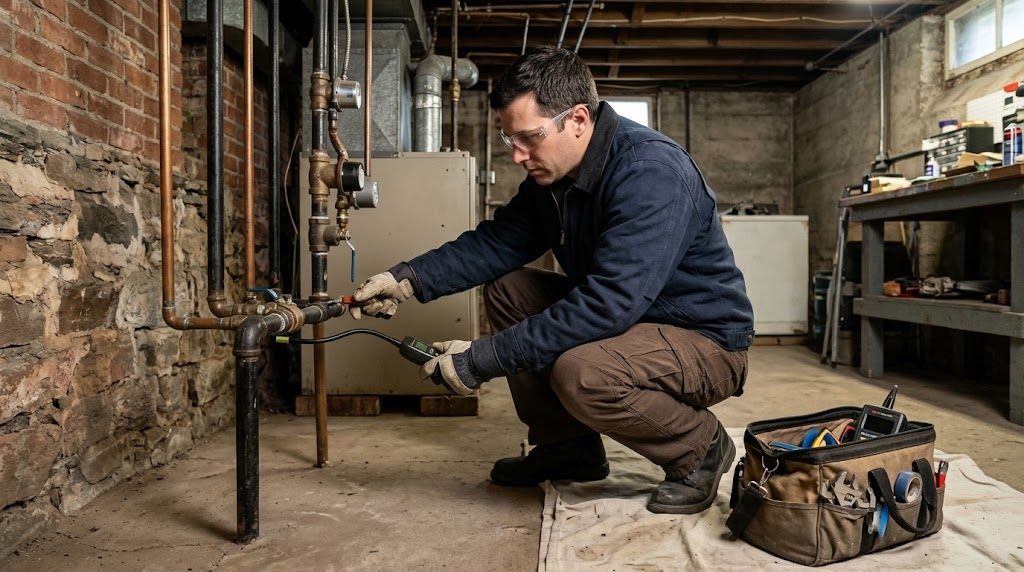
Precision Gas Piping Diagnostics & Testing
Natural gas fuels the majority of boilers, water heaters, and cooking appliances across southern Queens. Because gas operates under pressure, even minor joint corrosion or dried-out pipe dope compounds can create hazardous pinhole leaks. Our technicians perform non-emergency gas piping inspection Howard Beach Queens utilizing combustible gas detectors, ultrasonic leak sniffers, and precision manometer pressure tests.
If National Grid has locked your gas meter following a safety inspection or shutoff notice, our licensed professionals conduct comprehensive isolation testing across the entire distribution tree. We replace defective schedule-40 black steel pipes, repair brass shutoff stopcocks, and coordinate official DOB integrity pressure tests required to restore utility service.
Appliance Connections & Dedicated Gas Drops
Upgrading a kitchen or laundry room requires code-compliant fuel delivery. Installing a professional range requires sufficient gas volume and proper pipe sizing. We provide certified gas line installation for stove Howard Beach Queens, ensuring adequate BTU delivery, sediment trap (drip leg) installation, and compliant flexible stainless steel appliance connectors.
Never attempt to install or modify gas piping without proper licensing and permits. Improper fittings or undersized lines starve appliances, creating yellow flame rollout, incomplete combustion, and life-threatening carbon monoxide generation.
NYC Local Law 152 Compliance in Queens
Enacted to safeguard New York City buildings against gas piping catastrophes, NYC Local Law 152 requires periodic visual inspections of exposed gas lines in all buildings, excluding single-family and two-family detached homes classified under building code occupancy group R-3. For multi-family properties, commercial store-fronts along Cross Bay Boulevard, and residential cooperatives across Community District 10, inspections must occur every four years.
Our licensed professionals conduct thorough LL152 visual inspections from the point of utility entry through public corridors, mechanical boiler rooms, and exposed riser shafts. We detect hazardous conditions, improper sleeve penetrations, illegal unpermitted branches, and submit mandatory GPS1 compliance certifications directly to the NYC Department of Buildings.
Strict Adherence to NYC Fuel Gas Code
All gas piping repairs in New York City must be performed by or under the direct supervision of a Licensed Master Plumber. DIY gas work is illegal under NYC Administrative Code and invalidates homeowner insurance coverage. Every threaded connection must feature approved non-hardening pipe joint compound resistant to liquefied petroleum, proper pipe hangars spaced according to diameter, and dedicated emergency shutoffs within six feet of every appliance.
For boiler gas burner troubleshooting, visit our main boiler repair in Howard Beach page or explore domestic heating equipment on our water heater repair page.
Frequently Asked Questions About Gas Line Repair
If you smell natural gas (a rotten-egg sulfur odor) or suspect a gas leak, evacuate the building immediately. Do not operate light switches, do not unplug appliances, do not light matches, and do not use landline or cell phones inside the building. Once safely outdoors and away from the property, call 911 or the National Grid gas emergency hotline immediately. Do not call standard service numbers until the property is certified safe.
NYC Local Law 152 of 2016 mandates periodic inspections of exposed gas piping systems in all buildings across New York City at least once every four years, with the exception of one- and two-family detached homes classified under building code occupancy group R-3. Multi-family residential properties, mixed-use commercial buildings, and apartment complexes in Community District 10 must undergo formal inspections conducted by a Licensed Master Plumber (LMP).
Yes. In New York City, any modification, extension, or new installation of gas piping—including dedicated lines for gas ranges, clothes dryers, or heating equipment—must be performed by a Licensed Master Plumber and filed with the NYC Department of Buildings (DOB), followed by rigorous pressure testing and utility authorization.
Discover our service footprint on our service areas page or reach out directly on our contact page.